06_V4L2视频介绍及资料下载/笔记
1. 资料下载
GIT仓库:
https://e.coding.net/weidongshan/projects/doc_and_source_for_projects.git
注意:上述链接无法用浏览器打开,必须使用GIT命令来克隆。
GIT简明教程:http://download.100ask.org/tools/Software/git/how_to_use_git.html
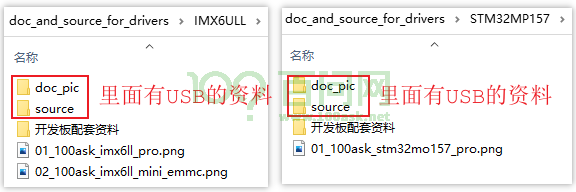
下载到GIT仓库后,V4L2资料在里面:
2. 收到的建议
ov13850在驱动中为啥要也要注册notified,同主设备注册的notified有啥区别?这块帮忙讲讲
subdev, media control, media framework, vb2 buffer的分配,怎么轮转,怎么跟硬件打交道,然后图像给应用层用
有的摄像头有控制接口iic,spi,还有没有控制接口的,我们怎么处理?
串行和解串包括cphy和dphy
现在sensor一般都是mipi输出(iic做控制),丢到ISP,ISP处理完了就拿到一帧数据,后面还可能有裁剪和编码等。@韦东山 会有ISP部分讲解吗?最终视频输出是屏幕还是通过网络做IPC或者USB做UVC?
MIPI资料网上也挺多的啊,把协议啃一啃
现在汽车上面都是sensor通过串行/解串器,然后通过mipi接口连接到soc
sensor---串行器---GSML---->解串器---->soc(mipi接口)这一条路也涉及一下,自动驾驶基本都涉及这个
3. 学习笔记
好文:https://zhuanlan.zhihu.com/p/613018868
Linux V4L2子系统分析(一): https://blog.csdn.net/u011037593/article/details/115415136
Linux V3H 平台开发系列讲解(摄像头)2.1 MAX9296 GMSL链路配置: https://blog.csdn.net/xian18809311584/article/details/131182605
https://github.com/GStreamer/gstreamer
麦兜<chenchengwudi@sina.com> 14:55:33 我也正在看V4L2,也参考了上面提到的Linux设备驱动开发,还有内核文档,基于5.4内核的,大家可以参考下
麦兜<chenchengwudi@sina.com> 14:55:42 https://lvxfuhal9l.feishu.cn/docx/Cyssdr8BVonDnnx3YjUc4O9xngg
麦兜<chenchengwudi@sina.com> 14:55:49 https://lvxfuhal9l.feishu.cn/docx/MYYndrVvPolMA4xhBCNczE4WnWf
麦兜<chenchengwudi@sina.com> 14:56:32 准备写一组笔记,目前完成了1.5篇
颜色空间总结 https://blog.51cto.com/u_15471597/4927811
https://zhuanlan.zhihu.com/p/159148034
sRGB和RGB的转换
https://www.zhangxinxu.com/wordpress/2017/12/linear-rgb-srgb-js-convert/
YUV(有程序)
https://www.cnblogs.com/a4234613/p/15497724.html
浅谈YUV444、YUV422、YUV420
http://www.pjtime.com/2021/4/192828404475.shtml
YUV与RGB 以及之间的转换
https://blog.csdn.net/WANGYONGZIXUE/article/details/127971015
YUV 4:4:4 每一个Y对应一组UV
YUV 4:2:2 每两个Y共用一组UV
YUV 4:2:0 每四个Y共用一组UV
480i、576i是什么意思?
SDTV、EDTV、HDTV:
-
SDTV:
- 采样频率13.5MHz,
- 每行扫描线包含858个采样点(480i系统)或864个采样点(576i系统)
- 有效线周期内,都是720个采样点
- 后来支持16:9宽高比,采样率为18MHz(有效分辨率为960x480i和960x576i),有效线内960个采样点
-
EDTV
- 480p、576p
- 采样频率:4:3宽高比27MHz,16:9宽高比36MHz
-
HDTV
- 720p、1080i、1080p
- 每线的有效采样点数量、每帧的有效线数目:都是恒定的,无论帧率如何
- 每种帧率都使用不同的采样时钟频率
-
480i和480p系统
- 480i属于SDTV
- 480p属于EDTV
- 隔行模拟分量视频
-
每帧525线,有效扫描线为480,在23
262和286525线上显示有效视频 -
帧率:29.97Hz(30/1.001)
- 隔行数字分量视频
-
- 逐行模拟分量视频
-
帧率:59.94Hz(60/1.001)
-
每帧525线,有效扫描线为480,在45~524线上显示有效视频
-
576i和576p系统
- 隔行模拟复合视频:单一信号线,每帧625线
- 隔行模拟分量视频:三种信号线,帧率25Hz,每帧625线,在23
310和336623线上显示有效视频 - 逐行模拟分量视频:三种信号,帧率50Hz,每帧625线,在45`620线上显示有效视频
- 隔行数字分量视频
- 逐行数字分量视频
SDTV、EDTV、HDTV是数字电视的三种标准,分别是标清电视、增强型标清电视和高清电视。它们的区别在于分辨率、画质和声音的质量。
- SDTV(Standard Definition Television):标清电视,分辨率为720×576或720×480,采用4:3的屏幕比例,通常是普通的电视机或DVD播放机所使用的基本分辨率。在播放高清节目时,会有黑边或画面拉伸等显示不完整的情况。
- EDTV(Enhanced Definition Television):增强型标清电视,分辨率为1280×720或960×540,采用16:9的屏幕比例。比标清电视分辨率更高,但仍不达到高清的标准,适用于播放分辨率较高的电影或游戏。在播放高清节目时,会有黑边或画面拉伸等显示不完整的情况。
- HDTV(High Definition Television):高清电视,分辨率为1920×1080或1280×720,采用16:9的屏幕比例,画面质量高,声音也更为清晰。是当前数字电视的最高标准,适用于播放高清电影、游戏、体育赛事和其他节目。在播放标清节目时,电视会对其进行升频,会用比标清分辨率更高的分辨率去显示,从而提高画质体验。
YUV420P(YU12和YV12)格式 https://blog.csdn.net/lz0499/article/details/101029783
色彩校正中的 gamma 值是什么
https://www.jianshu.com/p/52fc2192ae7b
https://www.zhihu.com/question/27467127
https://blog.csdn.net/weixin_42203498/article/details/126753239
https://blog.csdn.net/m0_61737429/article/details/129782000
https://blog.csdn.net/seiyaaa/article/details/120199720
Linux多媒体子系统01:从用户空间使用V4L2子系统 https://blog.csdn.net/chenchengwudi/article/details/129176862
Video Demystified:
https://www.zhihu.com/column/videodemystified
摄像头:
UI 设计知识库 [01] 色彩 · 理论 https://www.jianshu.com/p/34e9660f00f4
UI 设计知识库 [02] 色彩 · 理论 – 常见问题 https://www.jianshu.com/p/7f652ae75142
UI 设计知识库 [03] 色彩 · 配色 https://www.jianshu.com/p/b56acefc66ed
sRGB https://en.wikipedia.org/wiki/SRGB https://zh.wikipedia.org/wiki/SRGB%E8%89%B2%E5%BD%A9%E7%A9%BA%E9%97%B4
色彩空间是什么? https://www.pantonecn.com/articles/technical/what-are-your-color-spaces
Gamma、Linear、sRGB 和Unity Color Space,你真懂了吗? https://zhuanlan.zhihu.com/p/66558476
A Standard Default Color Space for the Internet - sRGB https://www.w3.org/Graphics/Color/sRGB
术语:
colorspace: SMPTE-170M、 REC-709 (CEA-861 timings) 、 sRGB (VESA DMT timings)
NTSC TV 、PAL
HDMI EDID
progressive、interlaced、
HDMI、webcam TV、S-Video
S-Video and TV inputs
Y'CbCr、RGB、
YUYV 4:4:4, 4:2:2 and 4:2:0
V4L2 capture overlay
4. videobuffer2
参考资料:
- https://www.linuxtv.org/downloads/v4l-dvb-apis-new/
- https://www.linuxtv.org/downloads/v4l-dvb-apis-old/vidioc-create-bufs.html
- 3种buffer:https://www.linuxtv.org/downloads/v4l-dvb-apis-old/index.html
- https://www.linuxtv.org/downloads/v4l-dvb-apis-old/buffer.html#v4l2-memory
- https://www.linuxtv.org/downloads/v4l-dvb-apis-old/mmap.html
- https://www.linuxtv.org/downloads/v4l-dvb-apis-old/userp.html
- https://www.linuxtv.org/downloads/v4l-dvb-apis-old/dmabuf.html
- https://www.linuxtv.org/downloads/v4l-dvb-apis-old/vidioc-expbuf.html
- 基于Streaming I/O的V4L2设备使用: https://blog.csdn.net/coroutines/article/details/70141086
- https://www.linuxtv.org/downloads/v4l-dvb-apis-old/mmap.html
- V4l2应用框架-Videobuf2数据结构 https://blog.csdn.net/weixin_42581177/article/details/126582465
- user ptr:https://github.com/h4tr3d/v4l2-capture-complex/blob/master/main.cpp
static const struct vb2_ops airspy_vb2_ops = {
	.queue_setup            = airspy_queue_setup,
	.buf_queue              = airspy_buf_queue,
	.start_streaming        = airspy_start_streaming,
	.stop_streaming         = airspy_stop_streaming,
	.wait_prepare           = vb2_ops_wait_prepare,
	.wait_finish            = vb2_ops_wait_finish,
};

const struct vb2_mem_ops vb2_vmalloc_memops = {
	.alloc		= vb2_vmalloc_alloc,
	.put		= vb2_vmalloc_put,
	.get_userptr	= vb2_vmalloc_get_userptr,
	.put_userptr	= vb2_vmalloc_put_userptr,
#ifdef CONFIG_HAS_DMA
	.get_dmabuf	= vb2_vmalloc_get_dmabuf,
#endif
	.map_dmabuf	= vb2_vmalloc_map_dmabuf,
	.unmap_dmabuf	= vb2_vmalloc_unmap_dmabuf,
	.attach_dmabuf	= vb2_vmalloc_attach_dmabuf,
	.detach_dmabuf	= vb2_vmalloc_detach_dmabuf,
	.vaddr		= vb2_vmalloc_vaddr,
	.mmap		= vb2_vmalloc_mmap,
	.num_users	= vb2_vmalloc_num_users,
};


s->vb_queue.ops = &airspy_vb2_ops;          // call_qop,call_vb_qop
s->vb_queue.mem_ops = &vb2_vmalloc_memops;  // call_ptr_memop

int vb2_queue_init(struct vb2_queue *q)
		q->buf_ops = &v4l2_buf_ops;
4.1 APP request buf
ioctl(fd, VIDIOC_REQBUFS, &rb);
--------------------------------
    v4l_reqbufs(const struct v4l2_ioctl_ops *ops,
		ops->vidioc_reqbufs(file, fh, p);
			vb2_ioctl_reqbufs
                res = vb2_core_reqbufs(vdev->queue, p->memory, &p->count);
                		num_buffers = min_t(unsigned int, *count, VB2_MAX_FRAME);
						num_buffers = max_t(unsigned int, num_buffers, q->min_buffers_needed);

                		// 给你机会修改num_buffers,num_planes
                		ret = call_qop(q, queue_setup, q, &num_buffers, &num_planes,		     								  plane_sizes, q->alloc_devs); // airspy_queue_setup

                        /* Finally, allocate buffers and video memory */
                        allocated_buffers =
                            __vb2_queue_alloc(q, memory, num_buffers, num_planes, plane_sizes);
             					ret = __vb2_buf_mem_alloc(vb);
                							call_ptr_memop(vb, alloc,
                                                 vb2_queue->mem_ops->alloc
                                                        vb2_vmalloc_alloc
                                                           buf->vaddr = vmalloc_user(buf->size);
                				ret = call_vb_qop(vb, buf_init, vb);
4.2 queue buffer
queue buffer关键点:
- VB2的链表:list_add_tail(&vb->queued_entry, &q->queued_list);
- 驱动自己维护的链表:list_add_tail(&buf->list, &s->queued_bufs);
驱动的URB传输完成后:
- 从链表queued_bufs取出buffer
- 把URB得到的数据填入buffer
- 调用vb2_buffer_done:list_add_tail(&vb->done_entry, &q->done_list);
dequeue buffer关键点:
- 从链表done_entry取出并移除第1个vb
- 把它也从queued_list中移除
ioctl(fd, VIDIOC_QBUF, &buf)
-------------------------------
    v4l_qbuf
    	ops->vidioc_qbuf(file, fh, p);
			vb2_ioctl_qbuf
                vb2_qbuf(vdev->queue, p);
					vb2_queue_or_prepare_buf(q, b, "qbuf");
					vb2_core_qbuf(q, b->index, b);
						list_add_tail(&vb->queued_entry, &q->queued_list);
						vb->state = VB2_BUF_STATE_QUEUED;

                            /*
                             * If already streaming, give the buffer to driver for processing.
                             * If not, the buffer will be given to driver on next streamon.
                             */
                            if (q->start_streaming_called)
                                __enqueue_in_driver(vb);
                                        /* sync buffers */
                                        for (plane = 0; plane < vb->num_planes; ++plane)
                                            call_void_memop(vb, prepare, vb->planes[plane].mem_priv);

                                        call_void_vb_qop(vb, buf_queue, vb);
											airspy_buf_queue
                                                list_add_tail(&buf->list, &s->queued_bufs);

                        if (pb)
                            call_void_bufop(q, fill_user_buffer, vb, pb);
4.3 dequeue buf
ioctl(fd, VIDIOC_DQBUF, &buf)
----------------------------------
	v4l_dqbuf
		ops->vidioc_dqbuf(file, fh, p);
			vb2_ioctl_dqbuf
				vb2_dqbuf(vdev->queue, p, file->f_flags & O_NONBLOCK);
					ret = vb2_core_dqbuf(q, NULL, b, nonblocking);
							ret = __vb2_get_done_vb(q, &vb, pb, nonblocking);
									*vb = list_first_entry(&q->done_list, struct vb2_buffer, done_entry);
									list_del(&(*vb)->done_entry);
							call_void_vb_qop(vb, buf_finish, vb);
							call_void_bufop(q, fill_user_buffer, vb, pb);
							__vb2_dqbuf(vb);
4.3 stream on
ioctl(fd, VIDIOC_STREAMON, &type)
------------------------------------
    v4l_streamon
    	ops->vidioc_streamon(file, fh, *(unsigned int *)arg)
    		vb2_ioctl_streamon
    			vb2_streamon(vdev->queue, i);
					vb2_core_streamon(q, type);
						ret = vb2_start_streaming(q);
                                    /*
                                     * If any buffers were queued before streamon,
                                     * we can now pass them to driver for processing.
                                     */
                                    list_for_each_entry(vb, &q->queued_list, queued_entry)
                                        __enqueue_in_driver(vb);
                                                /* sync buffers */
                                                for (plane = 0; plane < vb->num_planes; ++plane)
                                                    call_void_memop(vb, prepare, vb->planes[plane].mem_priv);

                                                call_void_vb_qop(vb, buf_queue, vb);
													airspy_buf_queue

                                    /* Tell the driver to start streaming */
                                    q->start_streaming_called = 1;
                                    ret = call_qop(q, start_streaming, q, atomic_read(&q->owned_by_drv_count));
												airspy_start_streaming // 分配提交URB
4.3 stream off
ioctl(fd, VIDIOC_STREAMOFF, &type)
-----------------------------------
    v4l_streamoff
    	ops->vidioc_streamoff(file, fh, *(unsigned int *)arg);
			vb2_ioctl_streamoff
                vb2_streamoff(vdev->queue, i);
                	vb2_core_streamoff(q, type);
						__vb2_queue_cancel(q);
							call_void_qop(q, stop_streaming, q);
								airspy_stop_streaming // kill URB

							call_void_vb_qop(vb, buf_finish, vb);
4.4 阻塞与唤醒
4.4.1 阻塞
memset(fds, 0, sizeof(fds));
fds[0].fd = fd;
fds[0].events = POLLIN;
if (1 == poll(fds, 1, -1))
--------------------------------------
v4l2_poll
	res = vdev->fops->poll(filp, poll);
			vb2_fop_poll
				res = vb2_poll(vdev->queue, file, wait);
							vb2_core_poll(q, file, wait);
								poll_wait(file, &q->done_wq, wait);
4.4.2 唤醒
airspy_urb_complete
	vb2_buffer_done(&fbuf->vb.vb2_buf, VB2_BUF_STATE_DONE);
4.6 读写buf
4.7 vidioc_prepare_buf
v4l2_ioctl_ops.vidioc_prepare_buf
    vb2_ioctl_prepare_buf
    	vb2_prepare_buf(vdev->queue, p);
			vb2_core_prepare_buf(q, b->index, b)
                call_void_bufop(q, fill_user_buffer, vb, pb);
					__fill_v4l2_buffer
                    /**
                     * __fill_v4l2_buffer() - fill in a struct v4l2_buffer with information to be
                     * returned to userspace
                     */